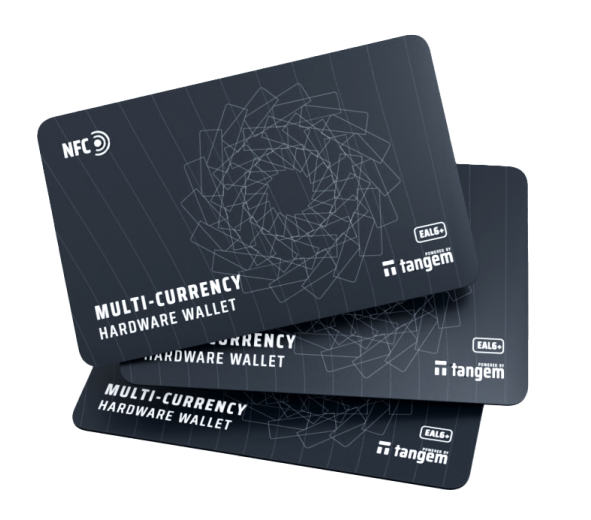
Whoa, this surprised me. The usual hardware wallet photos look like tiny bricks. Most folks picture USB dongles and seed phrases scribbled on paper, though actually there’s a quieter revolution happening: smart‑card form factor wallets that behave like your bank card but guard private keys with military-style isolation. My instinct said «too niche,» but then I used one for a week and something felt off about how casually I’d treated key custody before—yeah, I was sloppy. I’m biased, but if you care about usability and real security, you should pay attention.
Here’s the thing. Modern private‑key protection isn’t just about where keys are stored. It’s about how those keys are used, who can see them, and whether a phone app ever gets direct access to the raw secret. The weaker link is often the mobile environment—apps, malware, even careless permissions can leak secrets. On the other hand, physical tokens that never expose raw keys and sign transactions inside secure chips reduce attack surface dramatically.
Really? Yep. A smart‑card wallet isolates the secret in a secure element, and the card signs operations without ever revealing the key. That model shifts trust from software on your phone to certified hardware that resists tampering. Initially I thought this was mainly for corporate use, but then I realized everyday users crave simplicity: tap, confirm, done. The friction drops while security goes up, which is rare in crypto products.
Okay, so what makes a smart‑card approach different technically? First, secure elements are designed to resist physical and logical attacks, with dedicated crypto engines that perform ECDSA and other signatures inside the chip. Second, the embedded OS can enforce policies: limits on daily spends, requiring multiple confirmations, or pin retries that wipe keys after thresholds. Third, the card communicates over NFC or USB and only exchanges signed payloads, meaning the private key never leaves the card. These constraints are subtle but transformative for threat modeling.
Hmm… real world matters here. I tested transactions on Main Street coffee runs and during travel, and the card’s UX beat carrying seed words in my wallet. Mobile apps act as convenient UIs to compose transactions and show history, while the card does the heavy lifting—signing—safely. There are tradeoffs, though: you need to keep the card physically safe, and backups require a different mindset than mnemonic phrases. Not 100% perfect, but way better than relying solely on a phone.
How this fits into mobile app security
Whoa, I’ll be blunt. Mobile apps are good at UX but bad at secrets. Mobile OSes evolve, permissions change, and sandbox escapes happen. One wrong library or a phishing app can be disastrous. So the sane move is to design the mobile app as a thin, permissioned layer that never directly handles private keys. The smart‑card becomes the single source of truth, while the app validates, presents, and relays transactions.
On the engineering side, developers implement transaction serialization, user prompts, and QR or NFC exchanges, then hand a hash to the card for signing. This division of labor reduces the attack surface and simplifies audits. I noticed that when the app’s attack surface shrinks, it’s easier to reason about security boundaries and to communicate trust to nontechnical users—people appreciate «do this on your phone, confirm on the card» interactions.
Something bugged me at first: backups. We still need robust recovery. Smart cards often pair with backup solutions—secondary cards, Shamir backups, or encrypted cloud shards—but each comes with pros and cons. On one hand you can have offline physical backups; on the other hand, splitting secrets across multiple places can feel cumbersome. Honestly, I keep circling back to a hybrid strategy: physical primary card plus a safely stored recovery plan.
Whoa, seriously helpful note—if you’re shopping, look for certifications and transparent threat models. Not all cards are created equal. Some tout tamper resistance, but their documentation is thin. I like vendors who publish security whitepapers, third-party audits, and clear UX flows. Oh, and by the way, road-tested field reports from users matter: real attacks rarely look like lab tests, so community feedback fills gaps.
Why private-key protection is more human than technical
Here’s the thing. Security is a human problem as much as a crypto problem. People reuse words, lose slips of paper, or set weak PINs. A secure card forces better habits—persistence with confirmation prompts, visible transaction details, and fewer opportunities to copy secrets out into insecure places. That nudge matters. People will still make mistakes, but you reduce catastrophic errors.
Initially I thought quantum-resistant curves or exotic cryptography would be the headline feature, but then realized everyday safety wins come from simple design: the key never leaves the secure element, signing is explicit, and the UI makes intent clear. These are the practical guarantees that prevent headline-worthy losses. If a product pairs that with a solid mobile app and clear recovery workflows, adoption jumps, especially among nontechnical users who just want things to work without drama.
Something else: supply chain risks. Physical cards must be delivered with tamper-evident packaging, serial checks, and ideally device attestation so your app can verify the card is genuine before provisioning a key. That’s often overlooked, yet it’s crucial; buying a cheap, unverified card is asking for trouble. I’m not 100% sure every vendor nails this, so do your homework—ask questions, read forums, check audits.
Okay—practical recommendation. If you’re curious about trying this form factor, check out a trusted smart‑card hardware wallet that integrates with mobile apps cleanly and publishes security documents. One option I’ve seen gain traction for those exact reasons is the tangem wallet, which combines a card form factor with straightforward mobile flows and a focus on key isolation. Try it, use it for small sums, and observe how your mental model of custody shifts. You’ll learn fast.
Common questions
How is a smart‑card wallet safer than a phone‑only wallet?
A smart‑card isolates keys in a certified secure element and signs transactions internally, so malware on a phone can’t directly exfiltrate the private key. The app becomes a UI layer, not a key holder, which shrinks attack surface and simplifies audits.
What if I lose the card?
Backup strategies vary: secondary cards, Shamir backups, or encrypted backups are common. Each has tradeoffs between convenience and security, so pick one that fits your threat model and test recovery before committing funds.
Will this work with my favorite mobile wallet?
Compatibility depends on standards and integrations; look for vendors that support common protocols and provide clear developer docs. Many smart‑card solutions integrate with popular mobile apps or offer their own companion app for seamless use.





Deja una respuesta